

When to build one
Build a Team sequence when the play is repeatable but the audience isn’t a list. If you can describe your recipients as a Bridge, build a Bridge-based sequence instead and let Starbridge do the enrolling. Good candidates are the follow-ups your reps write over and over: the meeting mention follow-up, the RFP near-miss re-engage, the new-in-seat introduction. Writing it once means every rep sends the version you’d want them to send.Create a Team sequence
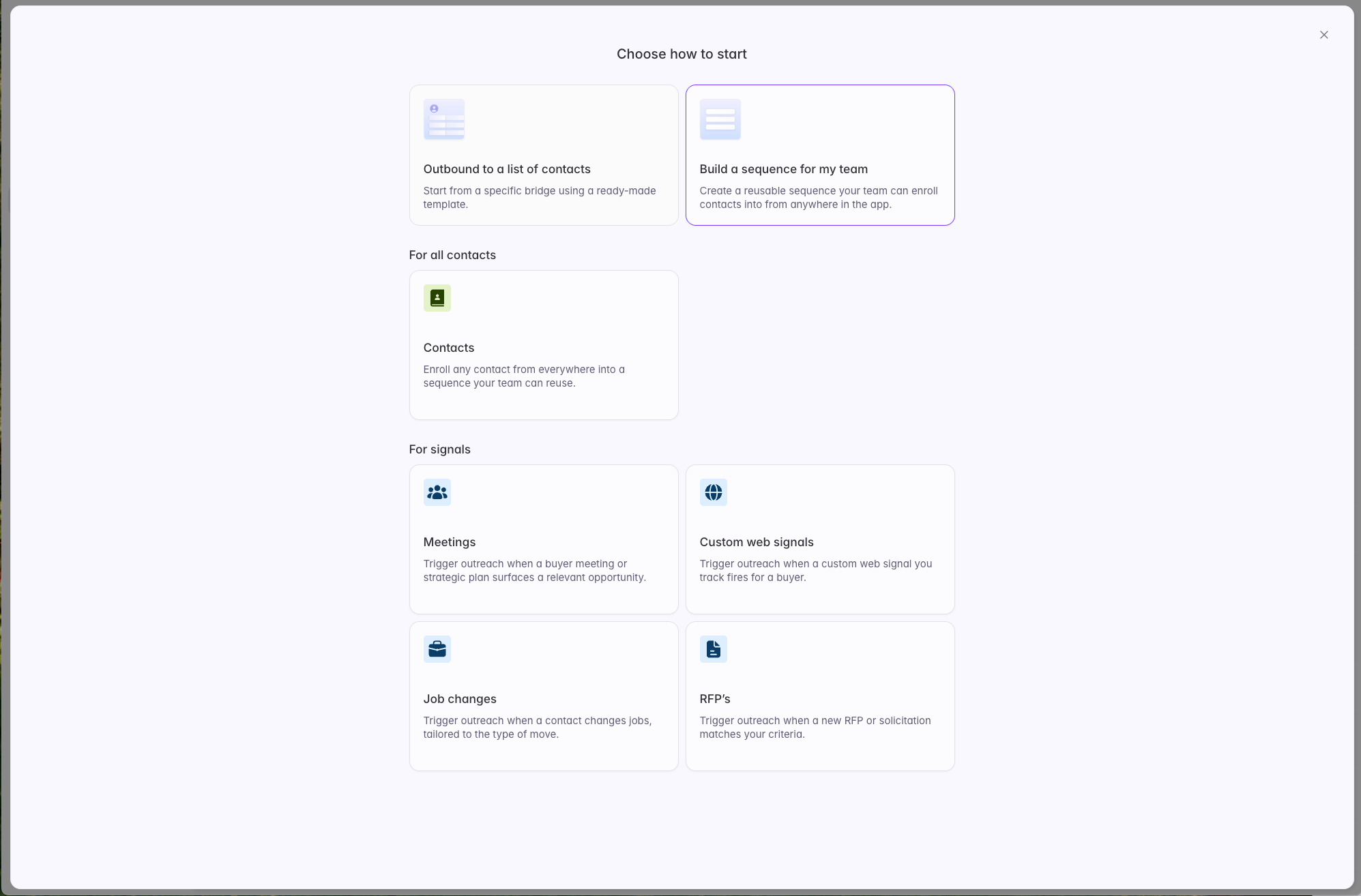
Open Sequences from the left sidebar and select New sequence.1
Choose a sequence type
The type scopes the sequence to a kind of data, which determines both what your messages can reference and which contacts reps can enroll.A rep enrolling a contact only sees sequences matching the signal that contact came from. Someone working a meeting signal sees your meeting sequences; someone on a buyer page sees your contact sequences. This keeps a job changes sequence, which opens by congratulating someone on a new role, from going to a contact who didn’t just change jobs.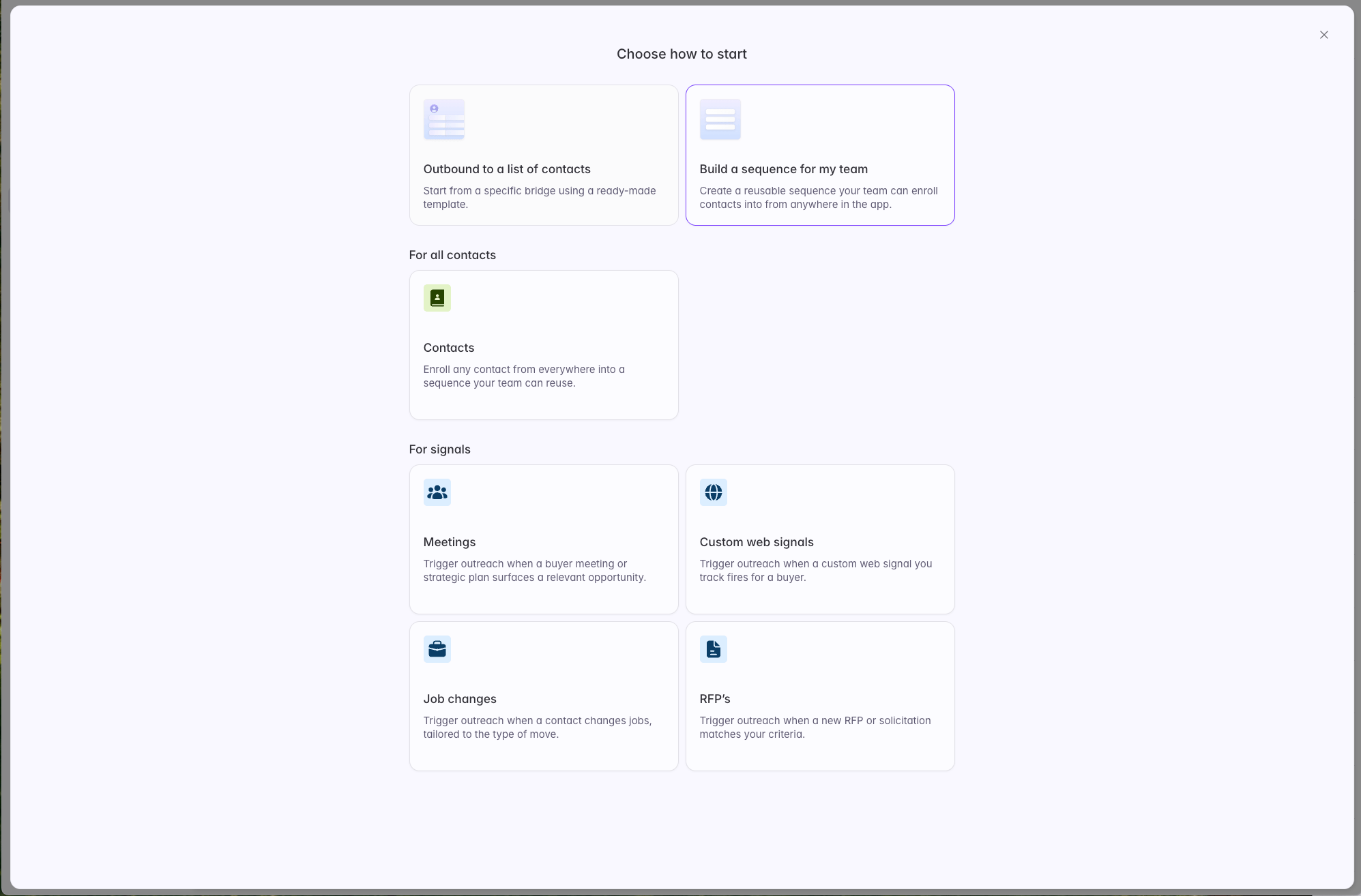
Only Starbridge-verified contacts can be added to a sequence. Unverified contacts extracted from documents aren’t eligible.
2
Name it
Give the sequence a unique name. Reps see this name when choosing where to enroll a contact, so make it describe the play rather than the mechanism. “New hire intro” beats “Job changes sequence 2.”
3
Set your exclusions
Your org’s default exclusion lists are pre-selected. Remove any that don’t apply, or add others from your buyer lists.Reps can’t enroll a contact whose account is on one of these lists. See Send settings and exclusions.
4
Create your messages
Build your steps exactly as you would for a Bridge-based sequence: generate the whole thing from a prompt, or add steps manually and write or generate each one.Your messages can use buyer attributes, contact attributes, and, if you chose a signal type, attributes from that signal. Because a Team sequence isn’t tied to a specific Bridge, columns specific to one Bridge aren’t available.Static text, variables, and AI snippets all work the same way as they do in a Bridge-based sequence. See Generate personalized outbound.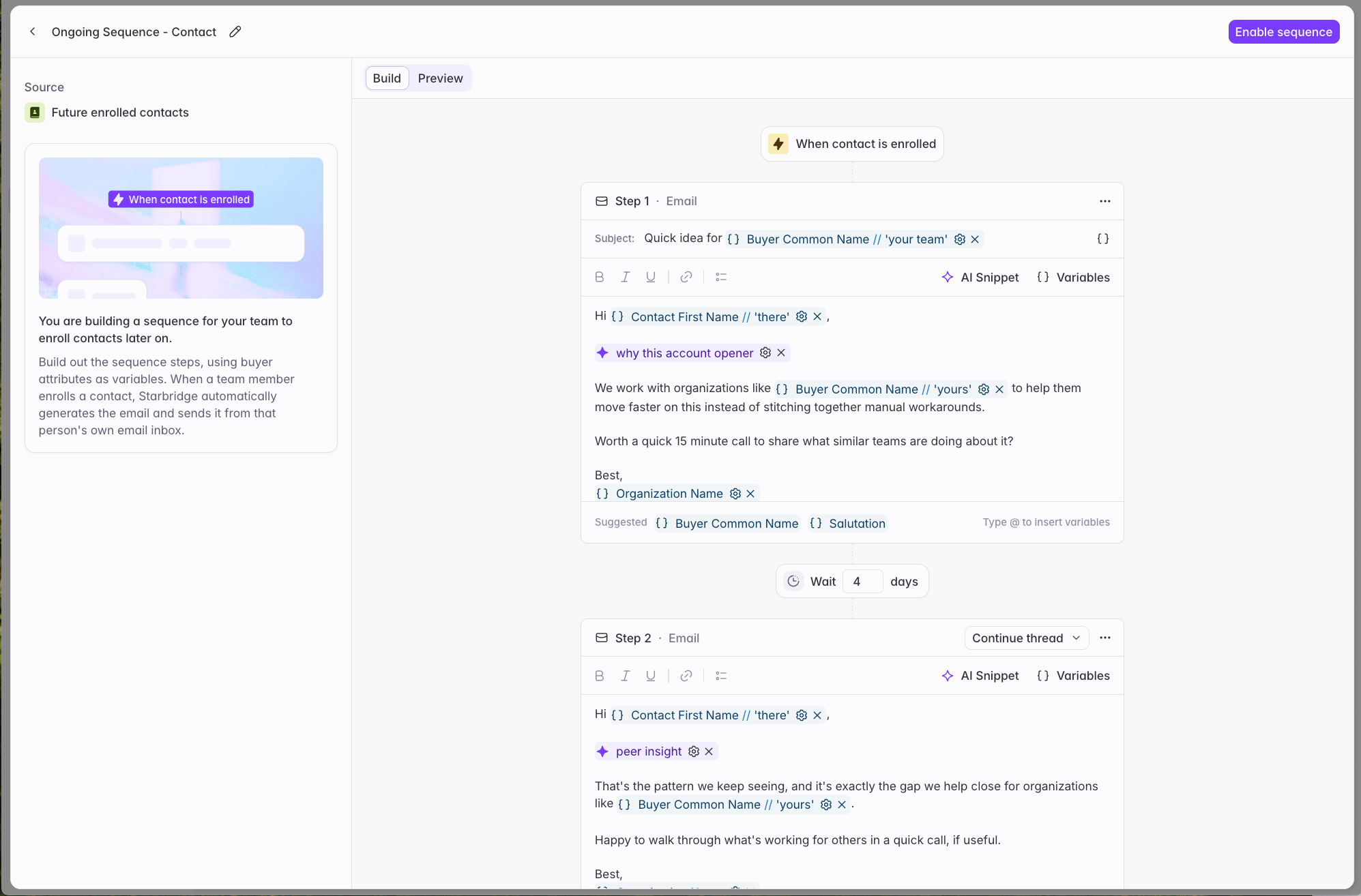
5
Create the sequence
A Team sequence goes Active as soon as you create it. It starts empty, so nothing sends and nobody is contacted. Reps can begin enrolling contacts right away.
You can preview a Team sequence against five randomly selected contacts before your team starts using it. These preview contacts aren’t added to the sequence; they exist only so you can see resolved copy.
How sending works
Team sequences send from the inbox of the rep who enrolled each contact, not from a shared pool you assign. Each rep needs their own connected inbox before they can enroll anyone. The sequence controls how much and how the emails send: daily volume, step prioritization, plain text, and unsubscribe link. The rep’s own inbox controls when, following their personal send schedule and daily limit. The Settings tab reflects this, showing that sending uses each enrolling rep’s inbox. See Send settings and exclusions for what each setting does.What reps see
Reps see Team sequences in their Sequences tab, filtered to those matching whatever signal they’re working from. They can enroll contacts, review and edit the generated copy for the contacts they enroll, and remove contacts. They can’t edit your steps, change settings, or pause the sequence. Reps see the contacts they’ve enrolled themselves. Builders and admins see every contact in the sequence, whoever added them, so you have the full picture of who’s being worked. For the rep-side walkthrough, see Enrolling a contact.Editing after creation
Edit steps while the sequence is Paused. As with Bridge-based sequences, steps can’t be added or deleted once a sequence is Active or Paused, and edits regenerate copy only for steps that haven’t sent. Pausing stops sending for everyone currently enrolled and prevents reps from enrolling anyone new.Where to go next
Enrolling a contact
The rep-side flow for adding a contact to a Team sequence.
Bridge-based sequences
Enroll a whole Bridge automatically instead of one contact at a time.
Send settings and exclusions
Configure sending volume, schedule, and deliverability protections.
Managing sequences
Monitor live sequences, and what every status means.