

Adding lookup and sync columns is available to all builders. Enabling the objects and fields that those columns can access is an admin-only step — ask your Starbridge admin if you don’t see the objects or fields you need.
Prerequisites
Before adding CRM enrichment columns to a bridge, an admin must connect your Salesforce or HubSpot integration and enable the relevant objects and fields in Settings > Integrations > [your CRM integration] > Objects and fields. See Connecting your CRM for setup instructions. If you’re not sure whether your integration is configured correctly, check with your Starbridge admin.Lookup columns
A lookup column finds a CRM record — an account, contact, opportunity, or custom object — for each row in your bridge. Lookup columns are the foundation for sync columns: before you can push data into the right CRM record, Starbridge needs to know which record to update.To add a lookup column
Click Add enrichment → Configure integration → Pull data from my CRM. Name the column, choose your CRM account, and select the object type to look up.Matching logic
For Salesforce Account or HubSpot Company objects, you’ll see an Account matching option. When enabled, Starbridge resolves the CRM account for each buyer using your org-level account matching settings, then falls back to any custom rules you define. For all other object types — or if you disable automatic account matching — define your own lookup rules. Rules work as a series of if-else statements: each block compares a CRM field to a value in your bridge, and Starbridge returns the first object that matches. Here you can define custom lookup rules, like: Match if CRM Contact Email equals Starbridge Contact Email, or if CRM Starbridge Contact ID equals Starbridge Contact ID.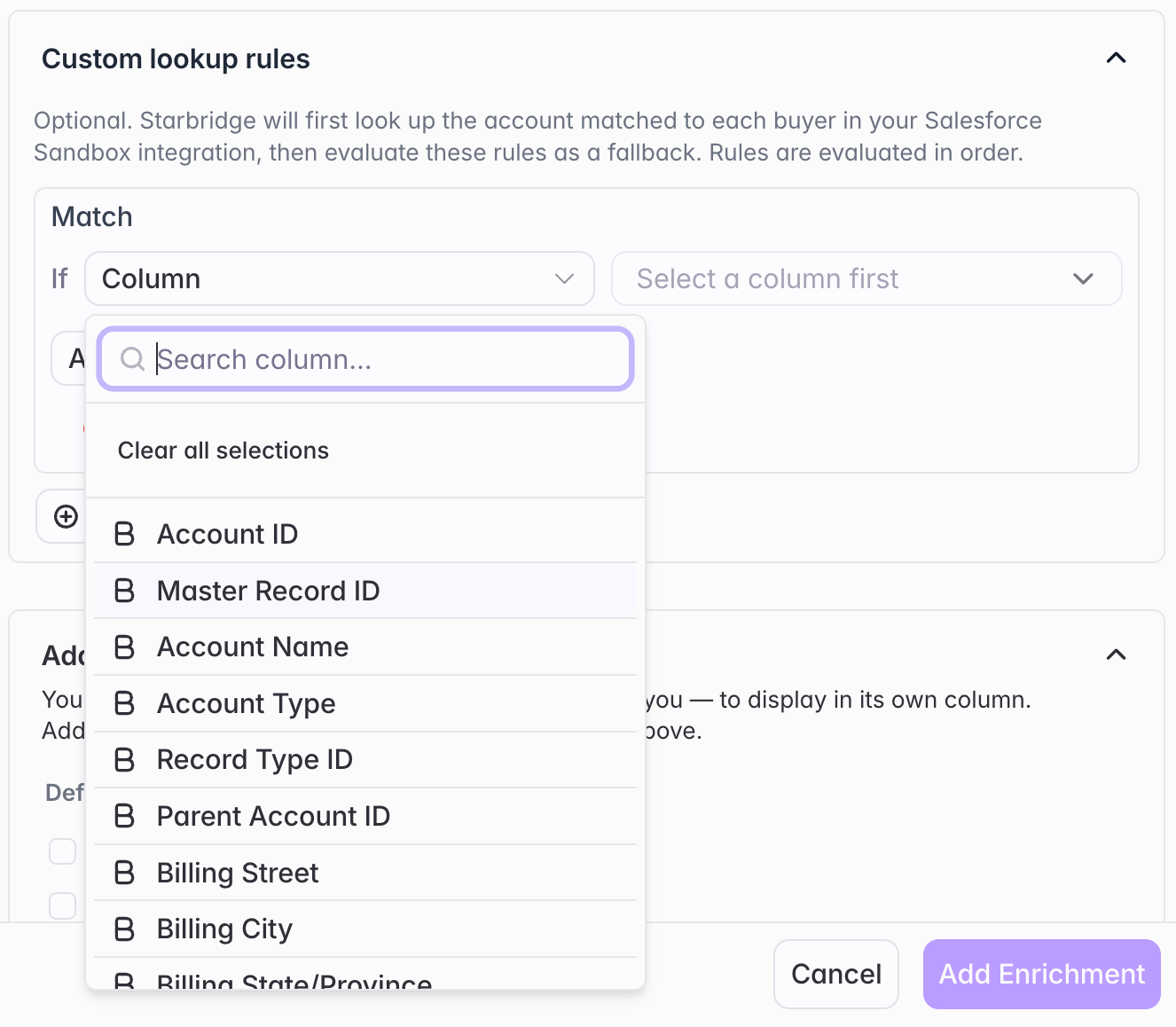
The leftmost dropdown represents your CRM object fields, and the rightmost dropdown represents Starbridge data fields.
Lookup results
Once the column runs, each cell shows one of three states:- No match — no CRM object matched your rules
- One match — a single object was found
- Multiple matches — more than one object matched your rules
Using lookup output
Lookup columns behave like any other multi-value column in Starbridge. You can use the result as an input to other columns (for example, an AI Analysis or Web Agent column), or pull a specific field from the matched object as a standalone reference column via Add enrichment → Reference existing data → Reference a column. You can add multiple lookup columns to the same bridge.Sync columns
A sync column pushes data from a bridge into Salesforce or HubSpot. In most cases you’ll set up one or more lookup columns first so Starbridge knows which CRM records to update.To add a sync column
Click Add enrichment → Configure integration → Send data to my CRM. Name the column, select your CRM account, and choose the object type to sync.Sync modes
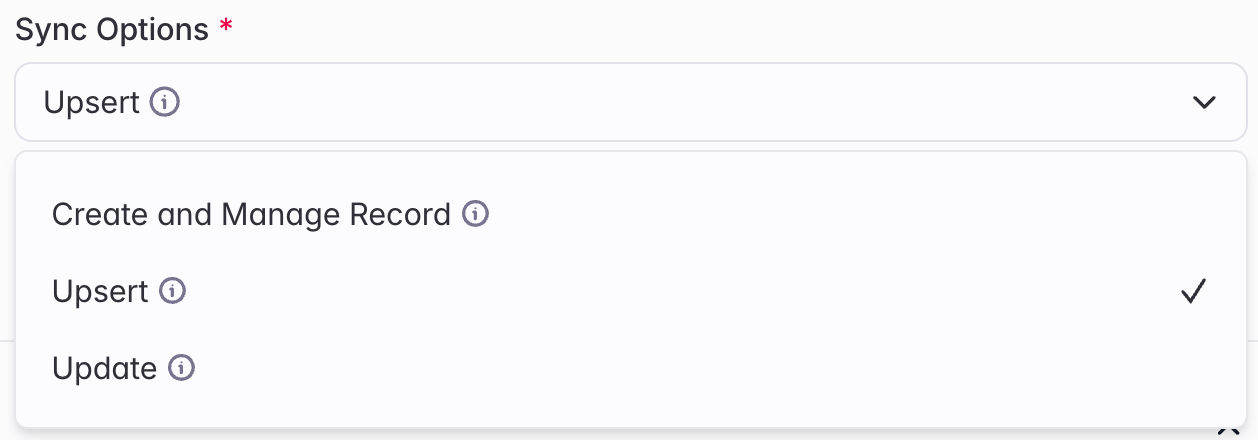
There are three sync modes:- Create and manage record — creates a new record. Can optionally keep the record updated as data changes in Starbridge.
- Upsert (recommended) — updates the record if a match exists; creates a new one if it doesn’t. Requires a lookup column or account matching.
- Update only — updates the record if a match exists; takes no action if it doesn’t. Requires a lookup column or account matching.
Field mapping
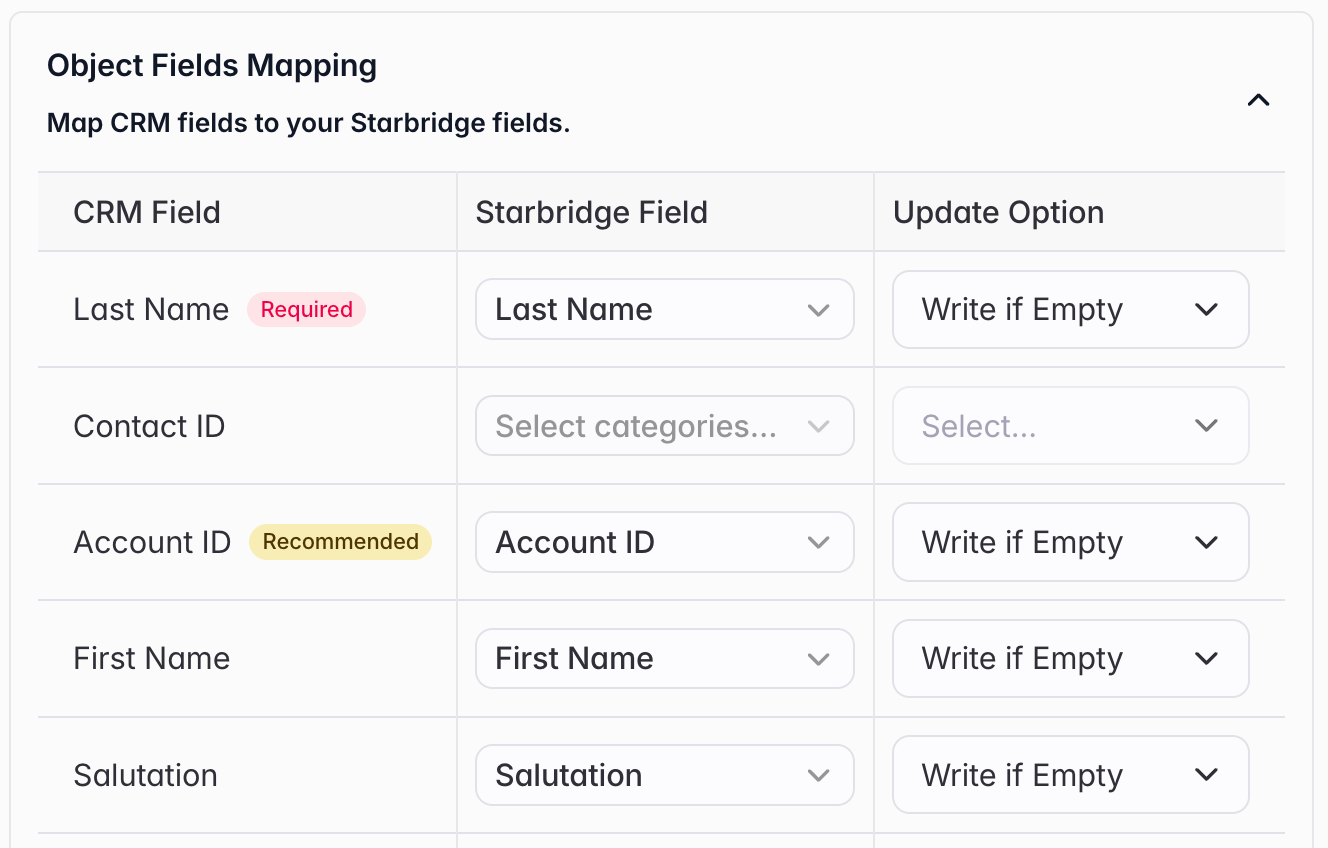
Starbridge displays CRM fields on the left. For each one, select the bridge column you want to map on the right — only type-compatible fields can be mapped. For each mapped field, choose a write behavior:- Write if empty — only fills the field if it has no current value in your CRM
- Overwrite — always writes the Starbridge value, replacing whatever is in your CRM
Run conditions
Run conditions let you control whether a sync column executes for a given row. For example, you might only want to sync a contact if the account lookup found a match, or only create a record if an email address is present.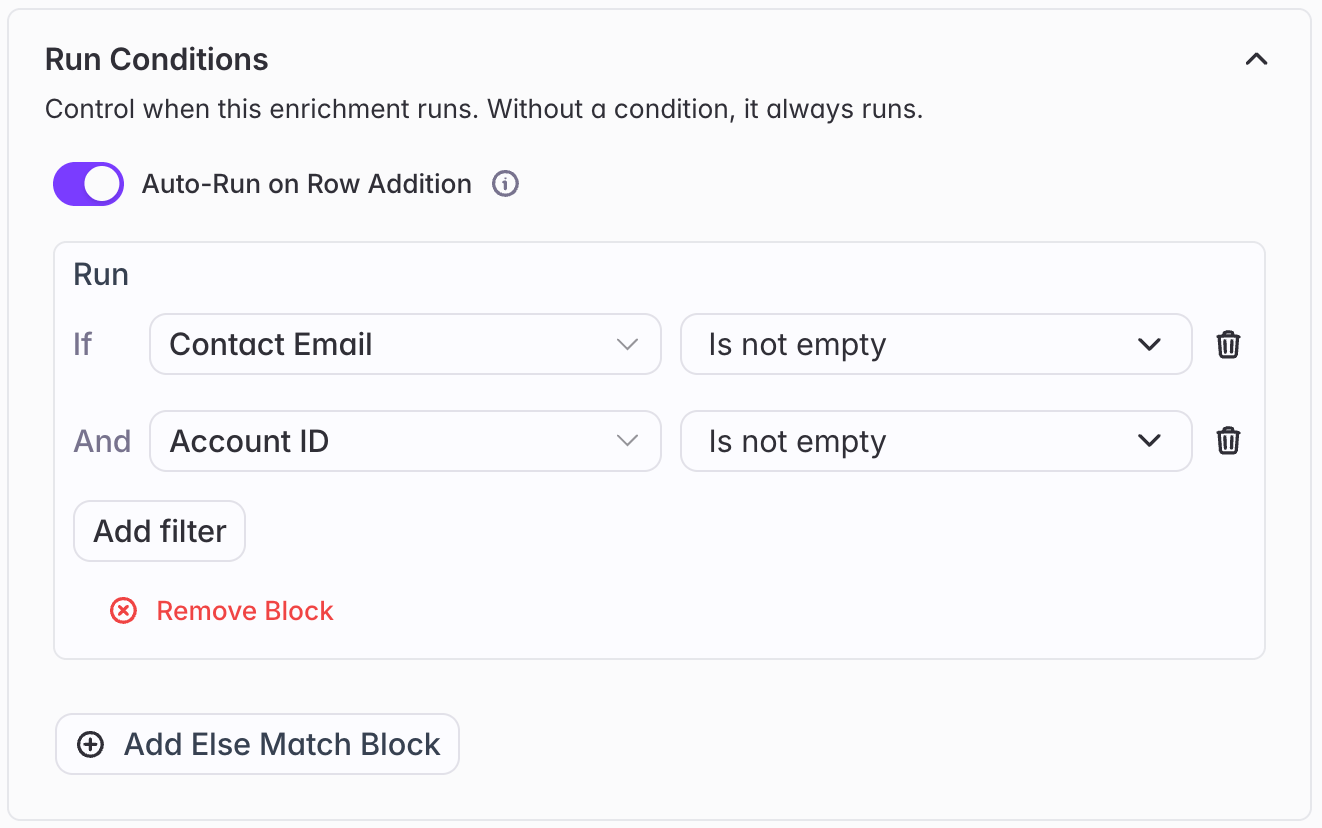
Rerun settings
Rerun settings let you control how often Starbridge reruns the sync. For example, you might want to resync anytime data changes or only when you want to manually push an update.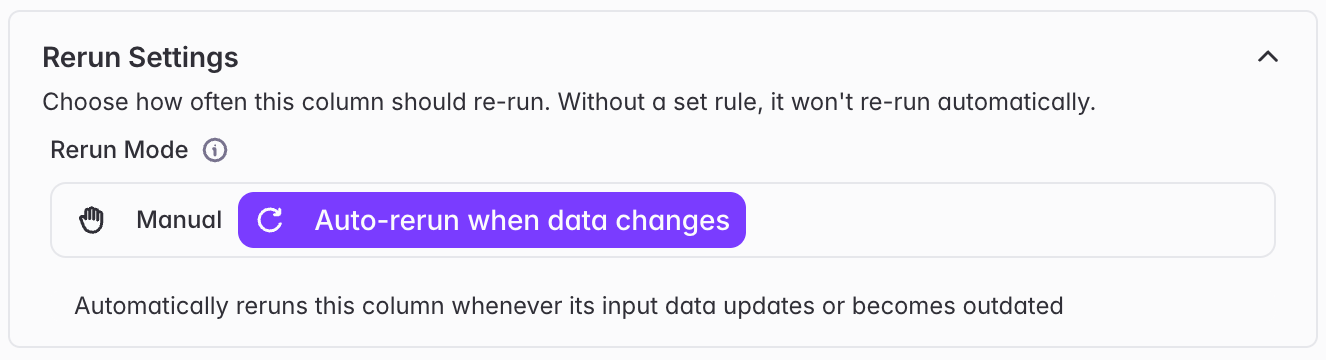
Sync status
After the column runs, each cell shows a sync status: Success, Skipped: Run condition not met, No action taken, or Error with an error message. Click into any cell to see a full history of syncs for that row.Common patterns
Sync contacts to your CRM
See Sync contacts to your CRM.Sync account data to your CRM
1
Add an account lookup column
Add a Pull data from my CRM column for the Account or Company object. Configure it using your org-level account matching settings or a custom matching rule.
2
Add an account sync column
Add a Push data to my CRM column for the Account or Company object and set the sync type to Update only.Map each Starbridge column to the corresponding CRM account field. For fields like scores or enrichment data that should always reflect the latest value from Starbridge, use Overwrite. For fields you only want to fill once, use Write if empty.
HubSpot-specific details
Normalized fields
HubSpot doesn’t differentiate between field types for several categories of data that Salesforce treats distinctly. As a result, Starbridge exposes a Normalized checkbox across a range of fields in the sync configuration UI. Starbridge provides built-in normalizations for:- Emails — strips whitespace, lowercases, and standardizes format for consistent matching
- URLs and domains — strips protocol, trailing slashes, and
www.prefixes for consistent matching
Next steps
Connecting your CRM
Setup guide for connecting your CRM and configuring objects and fields.
Account matching
Map your CRM accounts to Starbridge buyers — the foundation for all CRM enrichment columns.